How Artificial Intelligence Decodes Video Content Through Granular Analysis Using Markus Eders The Ultimate Run as a Benchmark


The intersection of winter sports cinematography and artificial intelligence has yielded new insights into how machine learning models process visual media. Developers at Mux, a prominent video infrastructure and developer platform, have utilized Markus Eder’s acclaimed 2021 freeskiing short film, The Ultimate Run, as a practical benchmark to demonstrate how AI systems ingest, parse, and categorize complex video feeds. Rather than processing digital video as a monolithic, continuous stream, modern artificial intelligence workflows rely on a structured hierarchy of components—ranging from individual static frames to overarching narrative scenes—to optimize computational efficiency and analytical accuracy.
Main Facts and Technological Overview
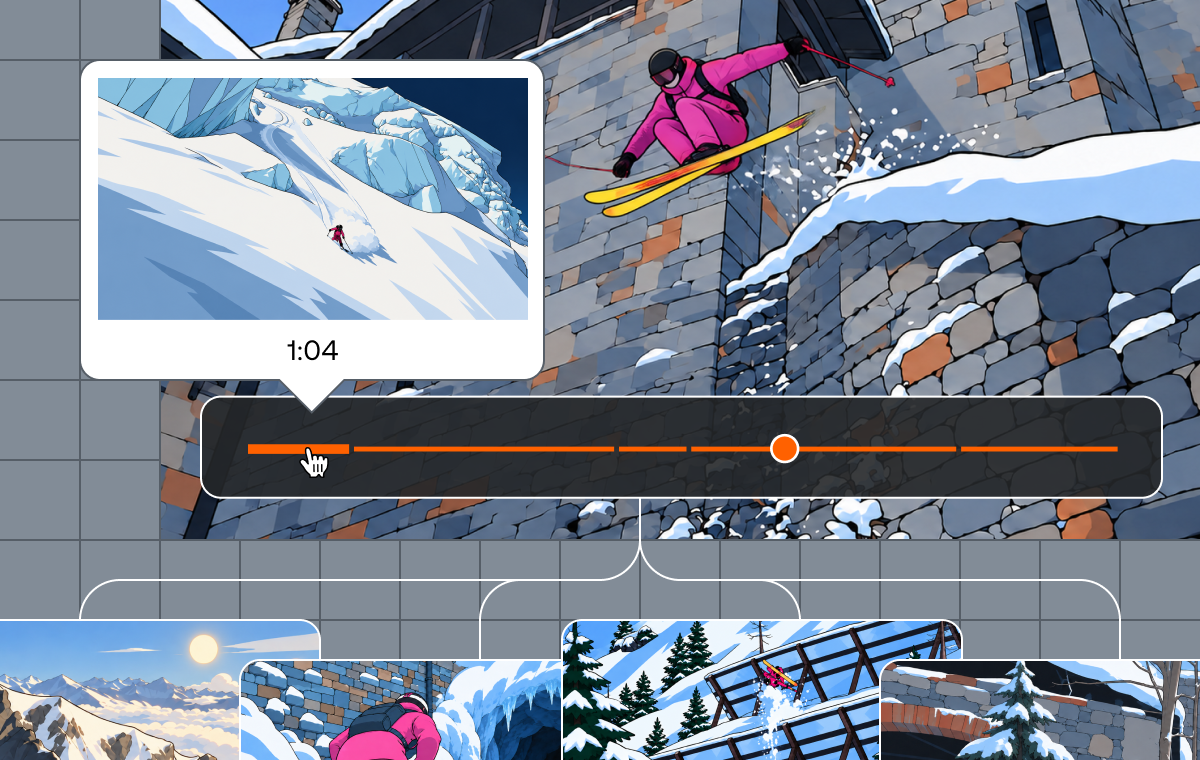
Processing video through artificial intelligence models presents a significant computational challenge. Standard high-definition video operating at thirty frames per second generates 108,000 distinct images every hour. Feeding every single frame into a vision-language model is both cost-prohibitive and computationally inefficient, as adjacent frames frequently contain redundant visual information.
To resolve this bottleneck, video engineering frameworks categorize video data into distinct granular layers: frames, shots, scenes, moments, and chapters. Each tier serves a specific analytical purpose, ensuring that AI systems process only the precise volume of data required to answer a given query. For instance, identifying a specific apex of a jump requires a single frame, whereas mapping an entire geographic sequence, such as a glacier descent, necessitates scene-level aggregation.
Background Context: The Benchmark Content
Markus Eder’s The Ultimate Run, produced by Production House and sponsored by Audi Nines and Volkl, serves as an optimal test case for multimodal AI processing due to its dense, rapid-fire visual composition. The ten-minute film is meticulously edited to simulate a single, uninterrupted descent, transporting the skier seamlessly from high-alpine powder fields through subterranean glacial ice caves, abandoned stone castles, and urban snow parks before reaching the valley floor.
Because the production features minimal spoken dialogue and relies entirely on environmental context and rapid camera cuts, it tests the limits of multimodal AI workflows. Traditional speech-to-text algorithms provide little utility here, forcing computer vision systems to rely heavily on visual change detection, spatial awareness, and structural continuity to make sense of the footage.
Chronology of Video Breakdown Layers

To effectively analyze a dynamic asset like The Ultimate Run, an AI workflow must navigate a strict hierarchy of structural components. Engineering teams generally deploy these layers in a sequential or tiered approach to minimize computational overhead.
-
Frame-Level Analysis
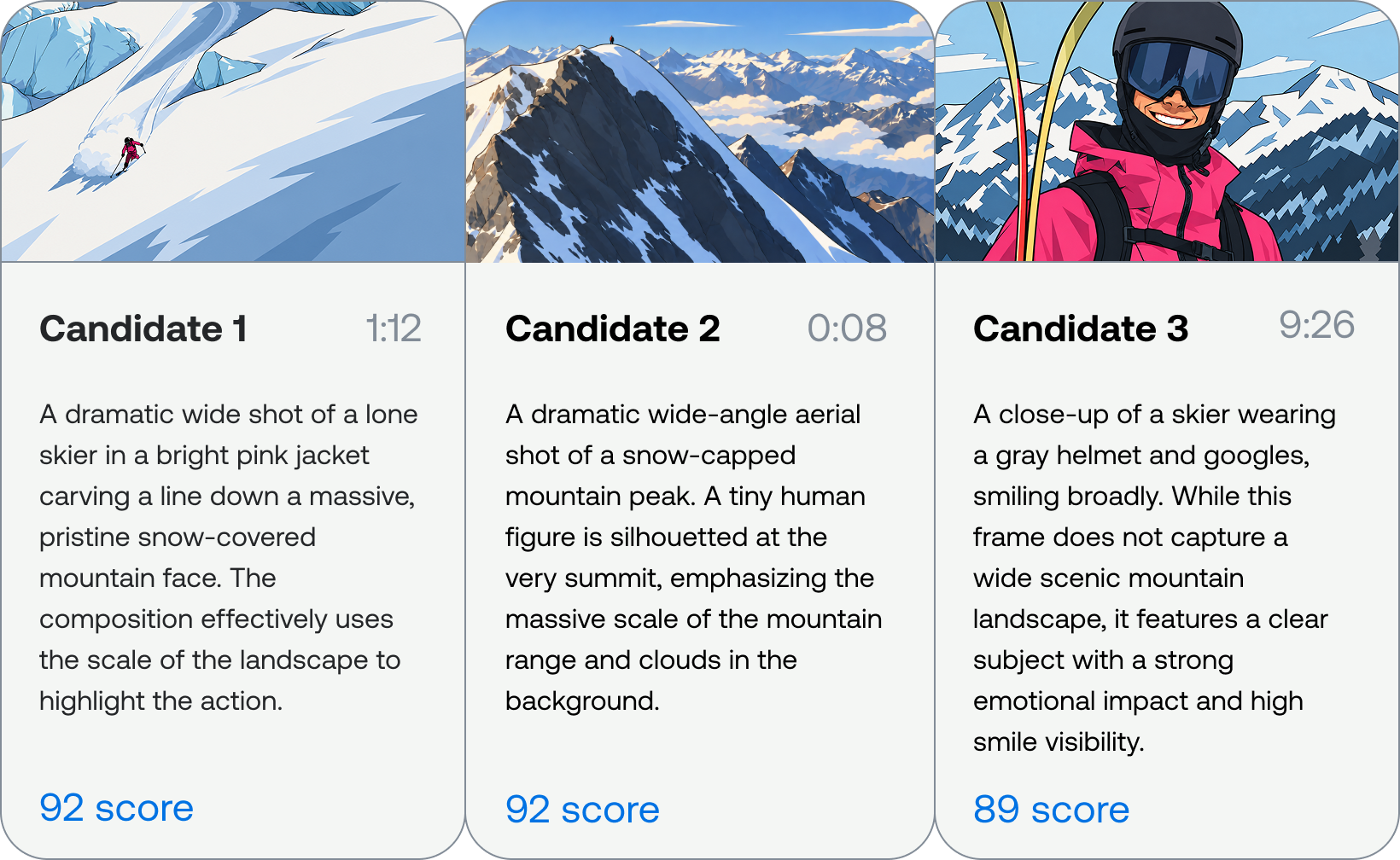
At the most microscopic level, a frame represents a single stationary image within the video timeline. Frames are deployed when a query requires hyper-specific visual verification, such as identifying a brand logo, conducting content moderation checks for safety compliance, or selecting an optimal thumbnail image. Systems like Mux Robots evaluate candidate frames based on clarity, composition, and facial recognition scoring. However, frames lack temporal context; a single frame can capture Eder mid-rotation, but it cannot confirm whether the landing was successful. -
Shot-Level Detection
Moving beyond static images, a shot defines a continuous take between two distinct camera cuts. Shot detection algorithms analyze pixel-level changes across consecutive frames to map out visual transitions. In fast-paced content like The Ultimate Run, which features numerous rapid cuts and varied terrain, shot-aware sampling allows AI models to detect shifts in state without inspecting every individual frame. This layer creates a foundational map of visual changes across the timeline.
-
Scene-Level Aggregation
While shots capture immediate visual transitions, scenes group neighboring shots that share a unified thematic, narrative, or geographic context. For example, while identifying the exact entry point into an ice cave is a shot-level task, recognizing the entirety of the subterranean sequence as a cohesive narrative block requires scene-level intelligence. By combining visual boundaries with auxiliary signals such as audio cues or transcript data, models can successfully cluster disparate camera angles into a single recognizable segment. -
Moments and Chapters
The outermost layers of video analysis focus on product utility and viewer navigation. Key moments isolate standalone excerpts—such as an entire jump sequence from approach to landing—tailored for highlight reels or social media distribution. Chapters, conversely, divide an extended video into structured, named segments, functioning analogously to a book’s table of contents. In The Ultimate Run, chapters naturally align with geographical transitions: the high-alpine start, the glacier and ice cave navigation, the snow park, the castle segment, and the final valley descent.
Supporting Data and Computational Efficiency

The economic and operational implications of granular video processing are substantial. Analyzing a one-hour video file without structural reduction can strain cloud infrastructure budgets and introduce latency unacceptable for real-time applications.
Empirical benchmarks within video processing pipelines indicate that token-based vision models scale significantly better when input data is pre-filtered through shot and scene boundary detection. By narrowing the dataset to the smallest possible segment containing the requested answer, system latency decreases by orders of magnitude. Furthermore, output steering algorithms allow developers to tailor these results to specific audience intents—differentiating, for instance, between a technical skier evaluating edge control and a casual viewer reacting to landscape cinematography.
Implications for the Broader Media Industry

The methodologies highlighted through the analysis of Eder’s descent extend far beyond extreme sports cinematography. The ability of AI systems to intelligently parse video assets impacts numerous commercial sectors, including digital streaming platforms, automated content moderation, broadcast compliance, advertising placement, and media archiving.
As automated agents increasingly interact with video databases, the demand for structured, searchable metadata continues to surge. Rather than treating video files as opaque digital blobs, modern infrastructure allows artificial intelligence to navigate media with human-like contextual awareness. Whether applied to a ten-minute freeskiing short film or a multi-hour corporate webinar, the foundational principle remains constant: utilizing the smallest, most relevant piece of video data necessary to deliver an accurate answer.